Claude Design by Anthropic Labs: Can It Compete With Gemini Canvas and Claude Artifacts?
Quick Answer
Claude Design is a new Anthropic Labs product launched in April 2026 that lets you collaborate with Claude AI to create polished visual work — designs, prototypes, slides, one-pagers, and more. It enters a space already occupied by Google’s Gemini Canvas and the original Claude Artifacts, but takes a different approach by focusing on visual design output rather than code or general content generation. This article compares all three tools and explains where each one excels.
Introduction
Anthropic launched Claude Design in April 2026 under the Anthropic Labs banner, and it completes a trifecta of AI-powered creative tools from the major players. Google has Gemini Canvas for visual content creation. The original Claude Artifacts lets you preview code and documents. Now Claude Design adds professional visual design to Anthropic’s lineup.
But the naming is confusing. Claude Artifacts and Claude Design are different products from the same company. Artifacts focuses on interactive previews of code, documents, and web content. Design focuses on polished visual output like prototypes, slides, and graphics. Understanding the distinction matters if you are trying to pick the right tool for your workflow.
Here is how Claude Design works, what it can do, and how it stacks up against the alternatives.
What Is Claude Design?
Claude Design is a product from Anthropic Labs — the experimental division of Anthropic that tests new ideas before broader rollout. It allows you to collaborate with Claude AI to create visual work directly through conversation. You describe what you want, Claude generates the visual output, and you iterate by giving feedback.
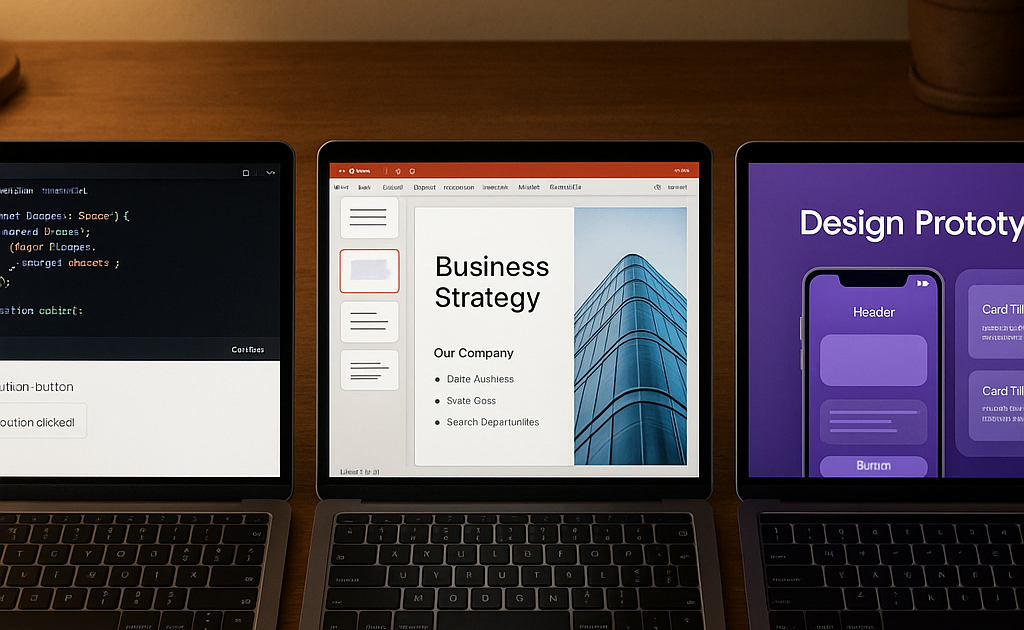
The key difference from standard Claude Artifacts is the output type. Artifacts generates interactive previews — think rendered web pages, data visualizations, or document layouts. Design generates polished visuals — slide decks, one-pagers, product mockups, and prototypes. One is for functional previews. The other is for finished-looking design work.
How Claude Design Works
The workflow is typical of AI creative tools. You start with a prompt describing what you want to create. “Design a one-page sales summary for Q1 2026” or “Create a product mockup for a task management app.” Claude generates the visual output in the chat interface. You can refine it by asking for specific changes: “Make the header blue, add a chart here, reduce the text size on the footer.”
Because it is an Anthropic Labs product, Claude Design is likely being tested with a subset of users before wider release. This is consistent with how Anthropic has launched experimental features — controlled rollouts with active feedback collection.
Claude Design vs. Claude Artifacts vs. Gemini Canvas
These three tools overlap but have distinct strengths.
Claude Artifacts (Anthropic)
Launched in 2024, Artifacts lets Claude generate and display interactive content directly in the chat window. You can see rendered HTML pages, SVG graphics, data flowcharts, and interactive dashboards without leaving the conversation. Artifacts excels at functional previews — code that runs, documents you can scroll through, visualizations you can interact with. It is best for developers and analysts who want to see what their code or data looks like in real time.
Gemini Canvas (Google)
Gemini Canvas, launched alongside Gemini in 2024, is a collaborative workspace where you can create and edit content with Gemini’s help. It supports writing, coding, and visual content creation in a shared document-like interface. Canvas is best for longer-form collaborative work — drafting documents, iterating on code, building presentations with real-time AI assistance.
Claude Design (Anthropic)
Claude Design focuses specifically on polished visual output. Where Artifacts shows you what something looks like, Design helps you create something that looks finished. Slides, prototypes, one-pagers, marketing materials. It is the most design-focused of the three tools, and the most directly competitive with professional design software — if it delivers on quality.
Where Each Tool Wins
Claude Artifacts wins on: Interactive previews, code visualization, real-time data rendering. If you want to see a live chart, a working web component, or a formatted document, Artifacts is the fastest path.
Gemini Canvas wins on: Collaborative editing, longer-form content, multi-format output. If you are writing a document with AI help, building a presentation, or iterating on a codebase in a shared workspace, Canvas gives you the most room to work.
Claude Design wins on: Polished visual design output, prototype creation, design iteration through conversation. If you need a slide deck that looks professional or a product mockup that could go straight to stakeholders, Design aims to be your tool.
Will Claude Design Replace Professional Design Tools?
This is the question every AI design tool faces. The short answer is no — not yet, and probably not soon. Professional design tools like Figma, Sketch, and Adobe Creative Suite offer granular control that AI generation cannot match. Layers, component systems, design tokens, precise typography control, collaboration workflows — these are features of professional tools that AI chat interfaces do not replicate.
What Claude Design can do is accelerate the early stages of design work. Need a first draft of a slide deck? Claude Design can produce it in seconds. Need a visual concept to show a client before committing to a full design sprint? Claude Design gives you something to react to. The AI handles the blank page problem. The human handles the refinement.
This is the same pattern we see across AI tools. AI generates the first draft. Humans refine it. The tools that succeed will be the ones that make that handoff seamless.
How Claude Design Fits Anthropic’s Strategy
Anthropic has been deliberate about expanding Claude’s capabilities without chasing every feature. Claude stays ad-free by design. The company prioritizes safety research alongside product development. Claude Design, as a Labs product, fits this pattern — it experiments with new capabilities without committing to a permanent product line.
Project Glasswing, Anthropic’s cross-industry security initiative with AWS, Apple, Google, Microsoft, NVIDIA, and others, shows the company is thinking at the infrastructure level. Claude Design shows they are also thinking at the application level. The strategy appears to be: secure the foundation, expand the capabilities, and let the market tell you what matters.
Should You Use Claude Design?
If you already use Claude for writing, analysis, or coding and frequently need to create visual outputs, Claude Design is worth trying. The integration with your existing Claude workflow means you do not switch contexts — the design conversation happens where your other AI work happens.
If you need professional-grade design tools with precise control, Claude Design will not replace Figma or PowerPoint. But it may replace the first draft. For many professionals, that is valuable enough.
Frequently Asked Questions
Q: Is Claude Design free?
A: As an Anthropic Labs experiment, availability and pricing are not fully specified. It is likely available to Claude Pro and Claude Team subscribers as part of their existing plan, similar to other Claude features.
Q: How is Claude Design different from Claude Artifacts?
A: Artifacts generates interactive previews of code, documents, and data visualizations. Design generates polished visual outputs like slide decks, one-pagers, and prototypes. Artifacts is for functional previews. Design is for finished-looking design work.
Q: Can Claude Design create a full presentation?
A: Yes, creating slide decks and presentations is one of its primary use cases. You describe the content and structure, Claude Design generates the visual output, and you iterate through conversation.
Q: Is Claude Design available to everyone?
A: It launched as an Anthropic Labs product in April 2026, which typically means an initial limited rollout with expansion over time based on feedback.
Q: Does Claude Design work with Figma or other design tools?
A: Details on third-party integrations have not been announced. The current workflow is self-contained within the Claude chat interface.
Conclusion
Claude Design fills a specific niche in the AI creative tools landscape. It is not a replacement for professional design software. It is not competing with code-focused tools like Claude Artifacts. It sits in between — an AI collaborator for the visual first draft.
The three tools — Artifacts, Design, and Gemini Canvas — are not competing for the same user. They compete for the same job: helping you create something faster with AI. Which one you choose depends on what you are creating and how polished it needs to be.
For visual design work that needs to look finished, Claude Design is the most targeted option in Anthropic’s lineup. Whether it will grow beyond an Labs experiment depends on how useful it proves in real workflows.
Closing Notes
Claude Design was announced by Anthropic on April 17, 2026. It is part of Anthropic Labs, the company’s experimental product division. For the most current information on availability and pricing, visit the Anthropic website.
Primary keyword: Claude Design
Secondary keywords: Anthropic Labs, Claude Artifacts, Gemini Canvas, AI design tools