This post was originally published on Medium.
Everyone Is Predicting AI in 2026 — But They’re All Pointing to the Same Future
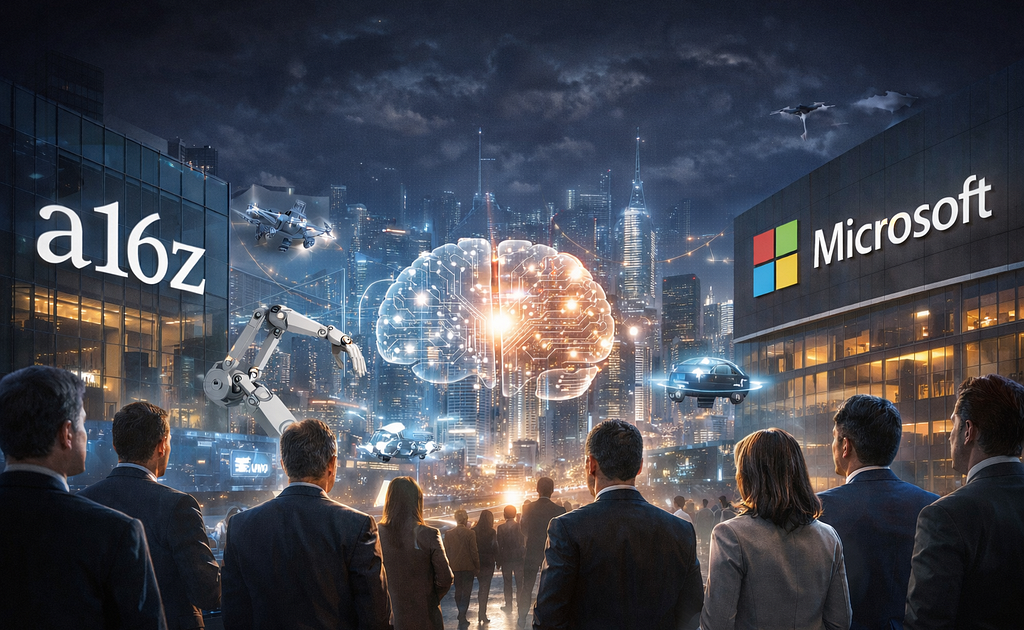
a16z and Microsoft agree on where AI is heading in 2026.
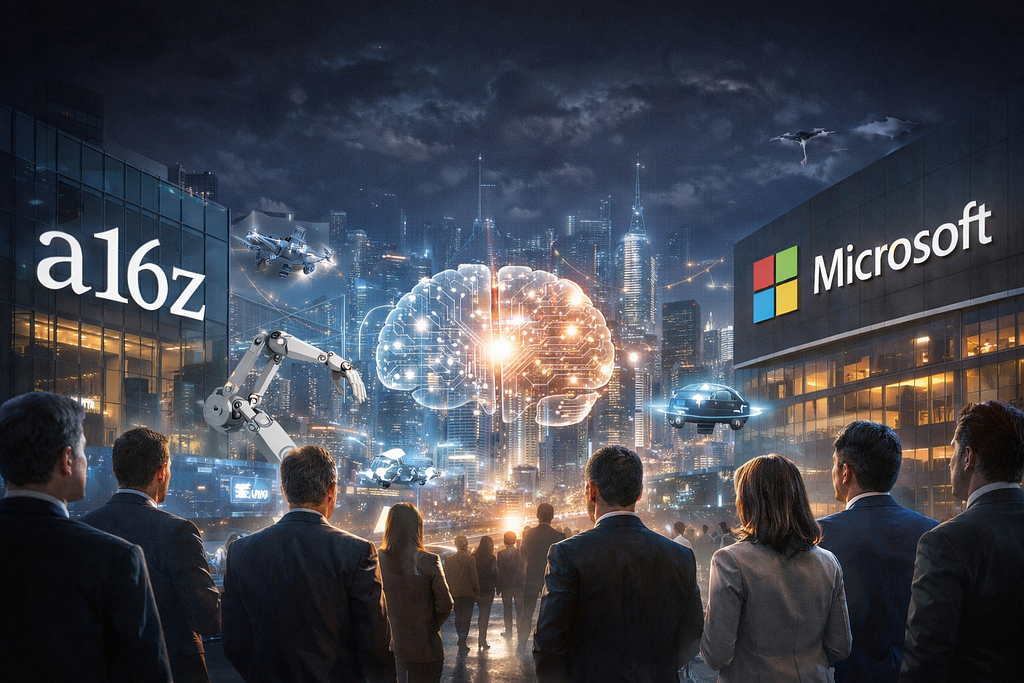
The expectations for AI have always been for it to be a tool for completing everyday tasks. But the reality for 2026 is that AI will be deeply entrenched in the daily workflow for productivity and decision-making. There’s beginning to be alignment across Microsoft and a16z, two institutions at opposite ends of the AI spectrum, with regard to AI playing a more proactive role. Where AI doesn’t just wait for your prompt, it observes your workflow and intervenes before you even realize you need help. This alignment between these tech giants suggests that it’s time to stop taking AI as an add-on but as a central part of the workforce.
From Tools to Coworkers
It’s not just the two tech giants. Across the AI ecosystem, from industry experts to AI analysts, everyone is predicting a future where AI is working alongside humans to amplify their efficiency and drive measurable outcomes.
So, for a marketing team, AI generates content based on learned user behavior, then a human will sign off on it before it gets posted. AI will then analyze user engagement to improve the next iteration. For a pharmaceutical company, AI can analyze a huge amount of clinical trial data, find patterns in it, and suggest ways to make better drugs. Then, human researchers will validate the findings.
This collaboration will reduce the time for delivery of a project by 50%.
The Quiet Death of the Prompt Box
The prompt box is a transitional interface, much like the command line interface (CLI) was, and was never meant to be the end state.
The chat interface requires users to know what to ask, thereby assuming the user has expertise in the problem they want to solve. The system is inherently flow-breaking, constantly pulling the user out of their primary workspace.
With AI embedded in the workflow, there’s no longer a requirement for a human to steer the process. The AI, deeply entrenched in the workflow, has a very good context of the project and can give context-aware suggestions. Its actions will be triggered by the behavior of the system, not by prompts.
The chat interface will continue to exist, but it will no longer be central to delivering a product. The primary role of the user will be to validate and approve the AI’s output.
Humans Stay in the Loop, But at the Top
As AI gets deeper into workflows, humans are going to move up the stack into the decision-making role in the system.
With humans stepping up higher and getting less involved in the workflow, meaning less prompting, correcting, re-prompting, and steering the system, their new job becomes deciding what matters and what direction to take.
With AI having better context and doing more of the heavy lifting, this reduces the cognitive load on the human and allows the human take a more supervisory role.
We’re No Longer Designing for Humans Alone
For decades, the user interface design optimization has been for humans, but that era of exclusivity is over as AI takes on a more prominent role as a coworker.
Products now have two users. The AI, which is now an active participant in the system, reads, acts, suggests, and coordinates across systems. And the human who supervises and makes the final decision in the system.
Now that AI increasingly acts as an intermediary, the new UI/UX design optimization will include how easily a system can be parsed by non-human actors. This means ensuring that while a human sees a clean interface, the AI receives clear system signals and structured workflows that allow it to act with precision.
The Real Shift of 2026
2026 won’t be the year that AI gets smarter, or a breakthrough model year. It will be remembered as the year that we saw a change in how AI exists inside work.
Across the predictions from a16z, Microsoft, and the broader AI ecosystem, one thing stands out: AI is moving from a tool that we occasionally use to a digital coworker who operates alongside us, one that is not prompt-driven but acts proactively based on the context and behavior of the system.
2026 becomes the watershed moment not because AI suddenly becomes “smarter,” but because context, integration, and reliability finally catch up. AI can now see enough of the system to act meaningfully within it. And once that happens, the old interaction patterns no longer make sense.
The future everyone is predicting isn’t about replacing humans or removing them from the loop. It’s about redesigning the loop itself, where AI handles execution and coordination, and humans focus on judgment, direction, and responsibility.
We didn’t just build better AI.
We changed where it lives.
And that’s the real shift of 2026.
Sources & Further Reading
What’s next in AI: 7 trends to watch in 2026
How AI Agents Will Transform in 2026 (a16z Big Ideas)
Everyone Is Predicting AI in 2026 — But They’re All Pointing to the Same Future was originally published in GoPenAI on Medium, where people are continuing the conversation by highlighting and responding to this story.